Why is My Bougainvillea Not Blooming? 6 Reasons & Quick Fixes
Everyone says bougainvillea is a flowering machine, so why is my bougainvillea not blooming? If your bougainvillea has been staying lush and green the whole time, don’t worry yet. Lanyao has put together a quick troubleshooting chart for you. You can compare it with your plant’s condition to quickly pinpoint the problem.
| Observed symptom | Most likely cause | Quick fix |
|---|---|---|
| Lush foliage but no flower buds | Too much nitrogen fertilizer / lack of water restriction | Stop using nitrogen fertilizer and switch to monopotassium phosphate (a high-phosphorus, high-potassium fertilizer). Begin water restriction to force blooming. |
| Weak, stunted plant | Damaged roots / oversized pot with waterlogging | Repot into a smaller pot to encourage root recovery. Check for root rot and move the plant to a sunny location. |
| Long, soft, leggy stems | Insufficient light / over-pruning of tender shoots | Move the plant to a spot with at least 6 hours of direct sunlight. Prune back hard to semi-lignified stems. |
| Blooms only once a year in a specific season | A naturally lazy-flowering variety | This is a varietal characteristic, such as some large-leaf red types. You can increase flower production through water restriction or switch to a free-flowering variety. |
Table of Contents
Diagnosing Why Your Bougainvillea Is Not Blooming
If you are dealing with a bougainvillea not flowering, you are not alone. Lanyao has summarized the most common reasons into six key points
1. Long-term insufficient light
Bougainvillea is a strongly sun-loving flower and prefers plenty of light. If it does not receive enough light over a long period, it will be very difficult for it to bloom. This is one of the most common answers to the question, “Why is my bougainvillea not blooming?”
Generally speaking, free-flowering bougainvillea varieties need at least 4 hours of direct sunlight per day. If conditions allow, Lanyao recommends providing 6 to 8 hours of direct sunlight. This will help the plant grow vigorously and bloom more easily.
2. Too much water and fertilizer
When bougainvillea receives abundant water and fertilizer, it will vigorously produce leaves and stems to claim territory. In drier conditions, however, it is more likely to bloom. This phenomenon is known as “drought stress.” So when growing bougainvillea, you can love it, but not too much. You need to stress it a little and let it feel that conditions are harsh, which actually makes it more likely to flower.
So how should fertilizer and water be managed exactly? Lanyao will explain this in detail in a later section.
3. Weak root system
For any plant to bloom and reproduce, it first needs a strong root system. After all, flowering consumes a great deal of nutrients. If the roots are not in good condition, they cannot support the nutrient supply required for blooming. A weak root system can be a hidden reason why your bougainvillea is not blooming.
Therefore, if you want your bougainvillea to bloom, you first need to develop a healthy root system. To do this, avoid using an oversized pot. Large pots tend to hold excess water, which can lead to root suffocation and rot. Smaller pots are better suited for root development and for the water-restriction method used to promote blooming.
4. Overuse of nitrogen fertilizer
Overusing nitrogen fertilizer is one of the main reasons bougainvillea produces only leaves and stems instead of flowers. Except when you are deliberately growing a larger canopy, you should be careful to limit nitrogen application. Try to avoid high-nitrogen fertilizers and instead use a balanced fertilizer with equal proportions of nitrogen, phosphorus, and potassium.
Bougainvillea naturally has a vining habit. Once it receives too much nitrogen, it will grow wildly. The stems may become very vigorous, but the plant will struggle to bloom. If your bougainvillea looks healthy but still has no flowers, this is one of the first things to check.
5. Incorrect pruning methods
Many gardeners immediately prune their bougainvillea as soon as the stems grow long. Some also pinch the tips. In fact, these incorrect pruning methods do not maintain a good plant shape, and they can also prevent the plant from blooming.
Pinching tender shoots does not effectively control excessive growth, nor does it encourage more branching. Randomly shortening stems can cause root dieback, stunted growth, or removal of flower buds, delaying blooming.
6. Variety issues
There are many varieties of bougainvillea, and different varieties differ greatly in flowering performance. When selecting a variety, try to learn about its flowering characteristics first. Lazy-flowering varieties naturally do not bloom much and may flower only once or twice a year. Free-flowering varieties can bloom repeatedly throughout the year.
If you’re still asking, “Why is my bougainvillea not blooming?” after checking light, water, and fertilizer, the answer may simply be the variety itself.
Essential Conditions on How to Get Bougainvillea to Bloom
If you want your bougainvillea to produce spectacular flushes of flowers, it must meet the following three conditions.
1. A free-flowering variety
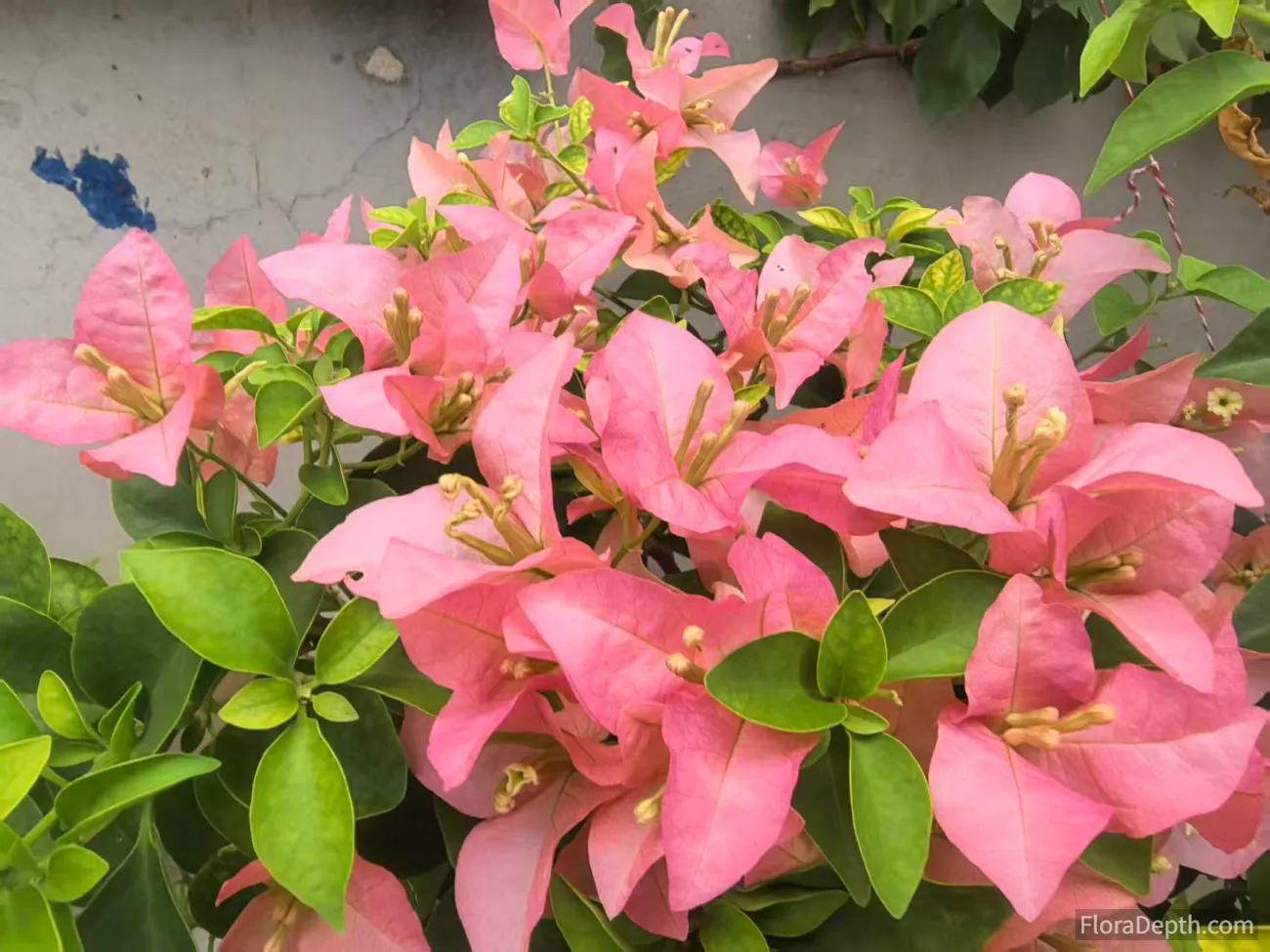
The free-flowering nature of the variety is extremely important. Lazy-flowering varieties are very difficult to bring into bloom multiple times a year. Be sure to learn about a variety’s flowering performance before choosing it.
2. Plenty of sunlight
The environment where you grow bougainvillea must have ample sunlight. Ensure the plant receives no less than 6 hours of direct sunlight per day, and at the very minimum no less than 4 hours.
3. A healthy plant
A healthy plant and a healthy root system are the foundation for continuous blooming. If your bougainvillea is already very weak, with yellowing leaves and no new shoots emerging, that indicates the root system is in poor condition. Such a plant is not suitable for bloom forcing. Lanyao suggests that in this case, it is more important to focus on root recovery first.
How to Make Potted Bougainvillea Flower: Quick Bloom-Forcing Tips
Once the underlying issues are resolved, you can move straight to bloom-forcing. If you want to master the full year-round care routine—including seasonal pruning and long-term feeding—check out my complete guide on how to make bougainvillea bloom.
Otherwise, if you just want quick results for your potted plant right now, simply follow these exact steps below.
1. Check the temperature
Bougainvillea does not bloom in midsummer when temperatures exceed 95°F (35°C). During this period, you can maintain abundant care and focus on growing the canopy. The larger the canopy, the more flowers it will eventually produce, making it easier to achieve a full, spectacular display.
When the temperature drops below 95°F (35°C), you can begin forcing blooms.
2. Check the condition of the stems
Bougainvillea needs relatively mature stems to bloom. If all the stems on your plant are still very tender, it will be difficult for it to flower in a short time. If you want to force blooming, there are two approaches.
① Control excessive growth and promote stem maturity
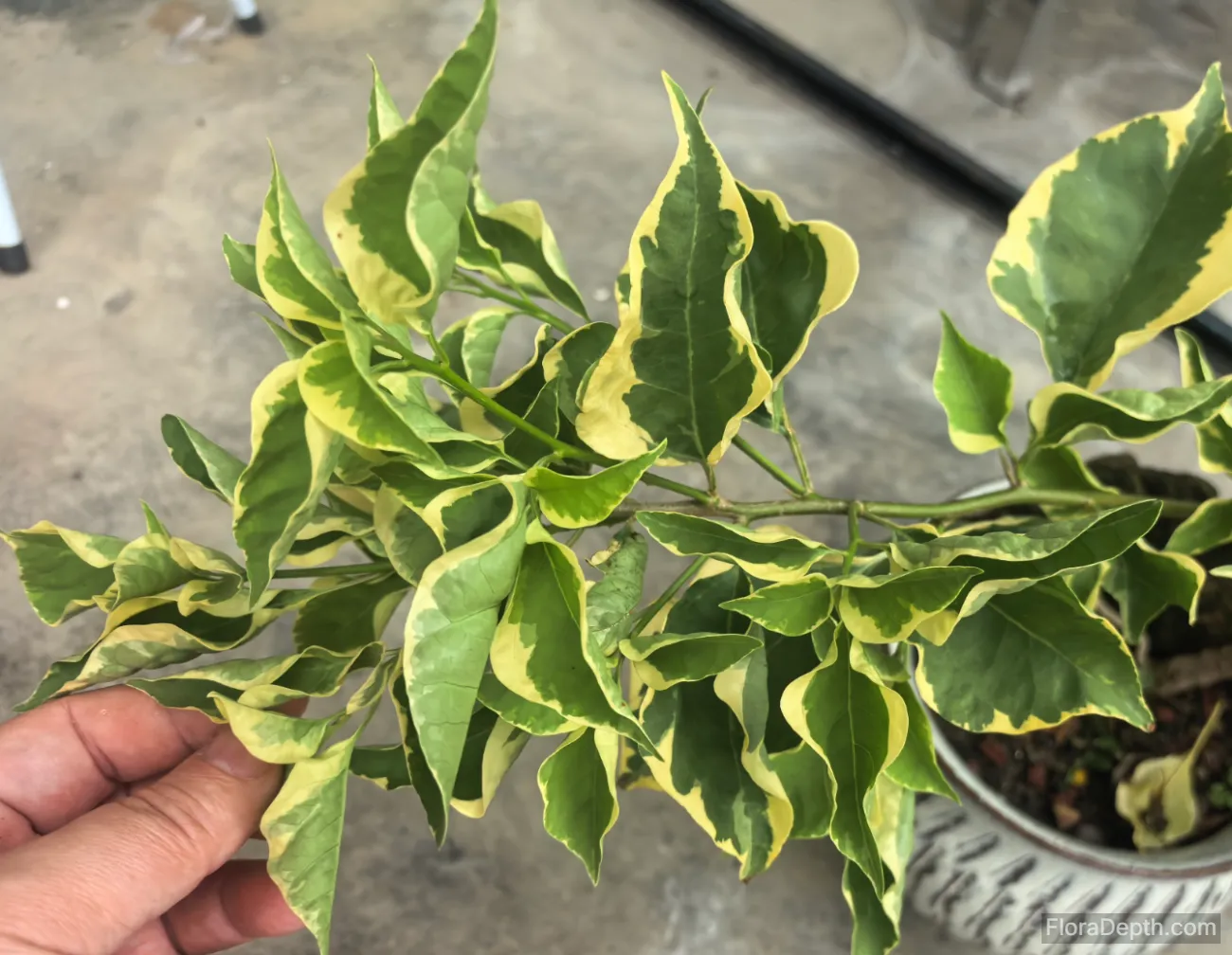
If the canopy is still small and pruning would not give you a satisfactory shape, Lanyao recommends not pruning. Instead, allow the stems to grow a little longer. Once the stems have become semi-lignified, you can begin forcing blooms.
Specific method for controlling vigorous growth:
Use appropriate drought stress and apply more monopotassium phosphate fertilizer. If the stems are growing too vigorously to control, you can also use a plant growth regulator such as paclobutrazol to restrain excessive stem growth.
This approach is suitable for gardeners who do not need the plant to bloom immediately. It allows the stems to mature while also enlarging the canopy.
② Prune to promote flowering
If your bougainvillea already has a large canopy, and removing the tender shoots will still leave a good overall shape, then Lanyao recommends pruning first and then moving directly into the bloom-forcing process. This will lead to faster flowering.
Specific pruning method:
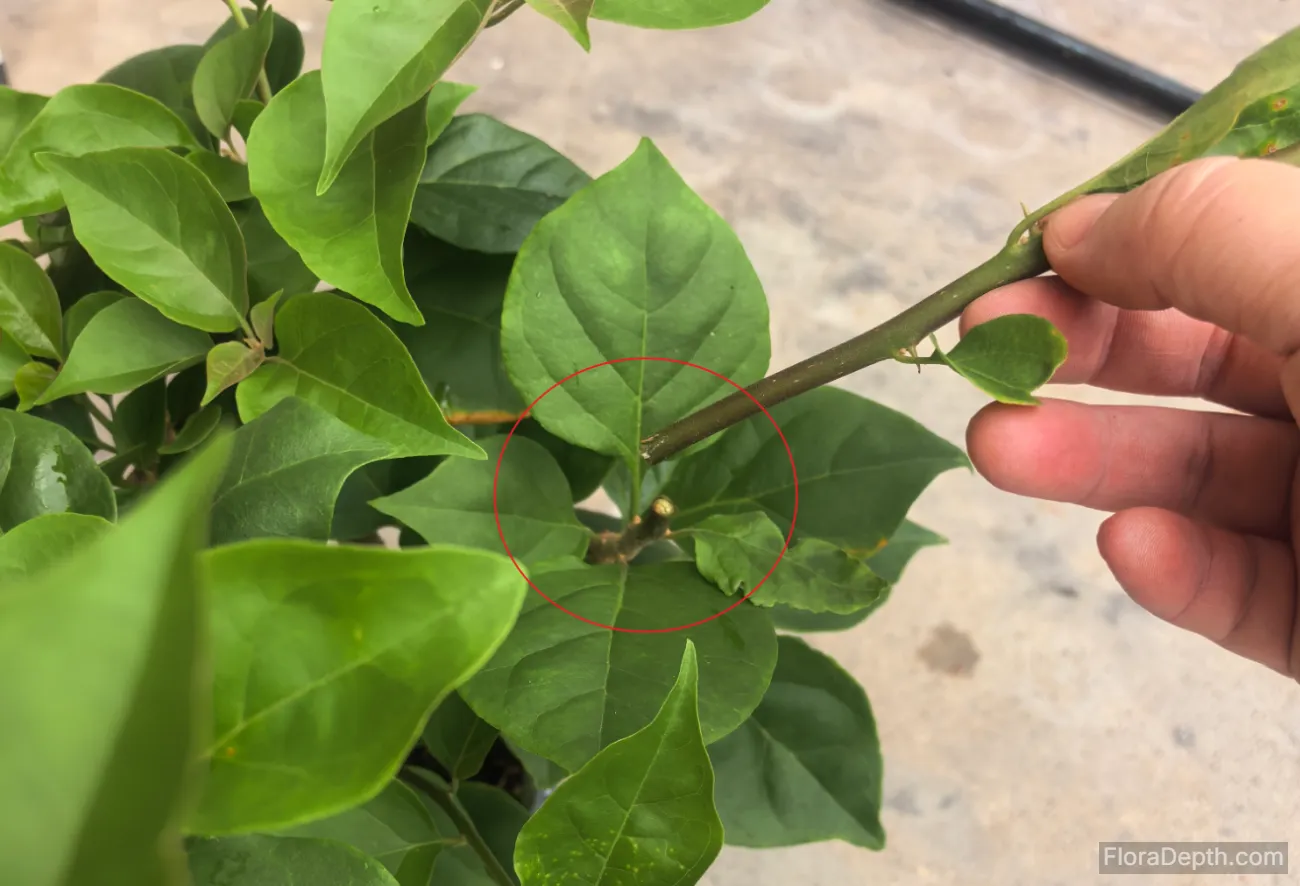
Locate the lignified or semi-lignified portion of each stem. If you like a rounded, ball-shaped flowering display, Lanyao suggests cutting back directly to the woody part of the stem, leaving 3 to 4 buds, and then beginning bloom forcing right away.
3. Specific bloom-forcing methods
Whether your bougainvillea stems have matured naturally or the plant has been pruned, once you decide to force blooming, you need to do the following steps.
① Provide sufficient light
Maintain 6 to 8 hours of direct sunlight every day. This is a hard requirement. Without enough light, do not expect your bougainvillea to produce good flowers.
② Restrict water
Water restriction is the single most important part of bloom forcing for bougainvillea. Therefore, if your bougainvillea is grown outdoors in a pot, Lanyao recommends moving it to a spot protected from rain during the bloom-forcing period. Otherwise, too much rainwater will definitely interfere with the process.
Many gardeners have heard of water restriction but do not know how dry the plant should actually become. If the restriction is too mild, they worry it will not work. If it is too severe, the bougainvillea may wilt from drought.
Here, Lanyao gives you a standard for water restriction that is both effective and safe enough not to kill the plant.
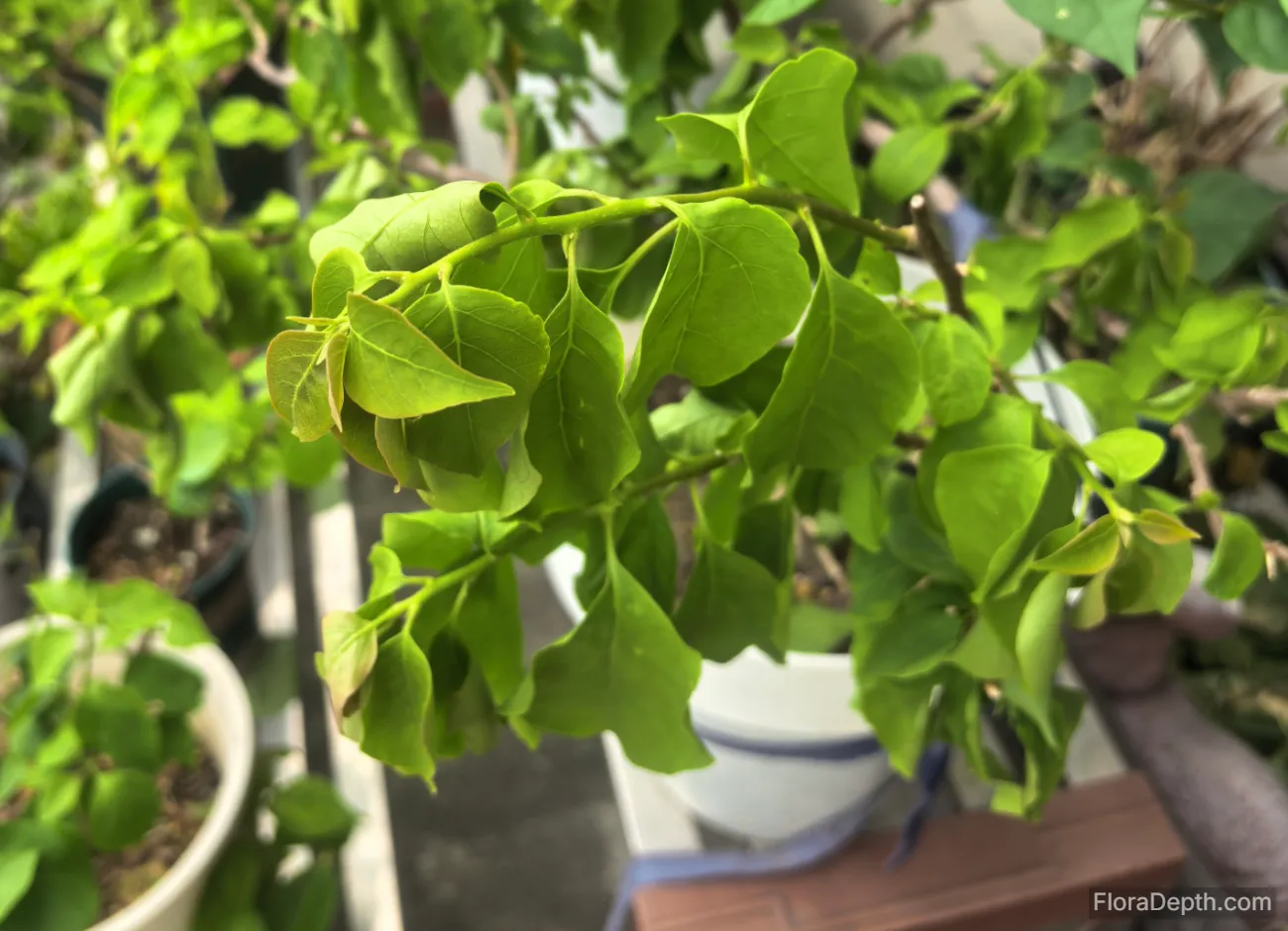
Two hours after sunset, if the bougainvillea leaves still look soft and droopy, as shown in the photo above, then it is time to water.
However, please note that both the timing and amount of watering at this stage require special attention.
Watering timing: If you notice in the evening that the leaves have drooped to the degree shown above, wait until the following morning to water. Allow this slightly water-stressed condition to continue through the night so that the plant fully senses the drought crisis.
Watering amount: When watering, do not soak the pot completely. Water only about halfway each time. To put it simply, if you normally use 1 liter of water to thoroughly soak the pot, then at this stage, apply only about 0.5 liter around the edge of the pot. After watering, the bougainvillea leaves will quickly recover and look refreshed, but by evening, they will again show a slightly wilted appearance.
After 3 to 4 weeks of this water-restriction treatment, you should see flower buds appearing on the stems. Once buds appear, stop restricting water.
③ Supplement phosphorus and potassium fertilizer
If you want your bougainvillea to produce more flowers, you should also pay attention to phosphorus and potassium supplementation during the water-restriction period. Without added phosphorus and potassium, the plant can still bloom, but the flower count will certainly not be the same as with fertilizer.
Lanyao recommends that during the water-restriction and bloom-forcing period, you apply a 1:800 dilution of monopotassium phosphate about every 7 days. Spray the leaves and also drench the roots once. This provides ample phosphorus and potassium, allowing the plant to develop more flower buds, produce a more spectacular display, and develop more vivid flower color.
How to Force Blooming in Ground-Planted Bougainvillea
Potted bougainvillea can be forced to bloom through water restriction, but for bougainvillea planted in the ground, restricting water is much more difficult. For ground-planted bougainvillea, Lanyao offers the following three suggestions.
1. Cover the soil around the roots during the rainy season
The biggest problem with ground planting is exposure to rain and the fact that the soil stays wet for a long time afterward. This makes water restriction very difficult. Before rain arrives, you can cover the soil around the bougainvillea with plastic sheeting to block rainwater from entering the soil near the roots.
2. Root pruning as needed
When the stems are already fairly mature but water restriction is not possible, you can use root pruning. Cut some of the outer roots of the bougainvillea. This reduces the root system’s ability to absorb water, making the plant more susceptible to drought. It may even cause a large number of yellow leaves to drop, but after leaf drop, new growth will often emerge with flower buds.
For this method, you need to plan the distance of root pruning reasonably according to the size of the plant. It can be difficult for beginners to judge, but you can experiment. Start by cutting a small amount of roots at a position relatively far from the main root, then observe the plant’s condition before making further adjustments.
3. Stop nitrogen fertilizer and use monopotassium phosphate to control vigorous growth
Bougainvillea is fairly tolerant of poor soil. For ground-planted bougainvillea, it is generally not recommended to use fertilizer, especially fertilizers high in nitrogen, which can easily cause leggy growth.
When you want to force blooming, apply monopotassium phosphate regularly. Lanyao recommends spraying the leaves in the evening with a 1:500 dilution every 5 days.
At the same time, you can prune off the larger leaves, keeping only the smaller ones. This allows the new shoots to receive light more effectively, which is more favorable for flowering.

Lanyao
A home flower grower with hands-on experience since 2014. FloraDepth currently focuses on practical bougainvillea care and container gardening, with more flower-growing guides to come.
More about Lanyao →Latest Garden Notes
) The temperature suddenly shot up these past couple of days, and all the osmanthus trees by my front door have…
The temperature suddenly shot up these past couple of days, and all the osmanthus trees by my front door have… Ever since I started growing bougainvillea, I've found it really low-maintenance. I barely have to do anything…
 I used to be really into growing roses. I’ve collected quite a few varieties over time, and while they’re gorg…
Related Articles
How to Make Bougainvillea Bloom: The Ultimate Guide
Learn how to make bougainvillea bloom with our complete care guide. Discover the exact sun, watering, fertilizer, and pruning secrets for non-stop flowers.

best fertilizer for bougainvillea before winter
Wondering what the best fertilizer for bougainvillea before winter is? Learn the right phosphorus and potassium rates, cold-protection boosters, and 4 pitfalls to avoid.

Bougainvillea Growing Too Fast But Not Blooming
Is your bougainvillea growing too fast but not blooming? Learn the 3 root causes of excessive vegetative growth and how to switch your plant to bloom mode with simple steps.

Bougainvillea in Pots: How to Protect It Through Winter
Learn the critical temperature thresholds for overwintering bougainvillea in pots—10°C to bring it indoors, 5°C as the final survival line. This full guide covers pre-indoor preparation, watering and fertilizing by plant condition, indoor light and temperature matching, and low-temperature survival plans for homes without heating.
Bougainvillea Losing Flowers? 7 Reasons & How to Save It
Is your bougainvillea losing flowers or dropping buds? Discover 7 common causes—from overwatering to cold stress—and learn how to save your plant today!