How to Revive a Dying Bougainvillea: A 4-Step Rescue Guide
Last month, a fellow gardener sent me a private message with a photo. Her bougainvillea had lost all its leaves, the stems were brown, and it showed no signs of life. She asked, "Lanyao, is this bougainvillea dead?"
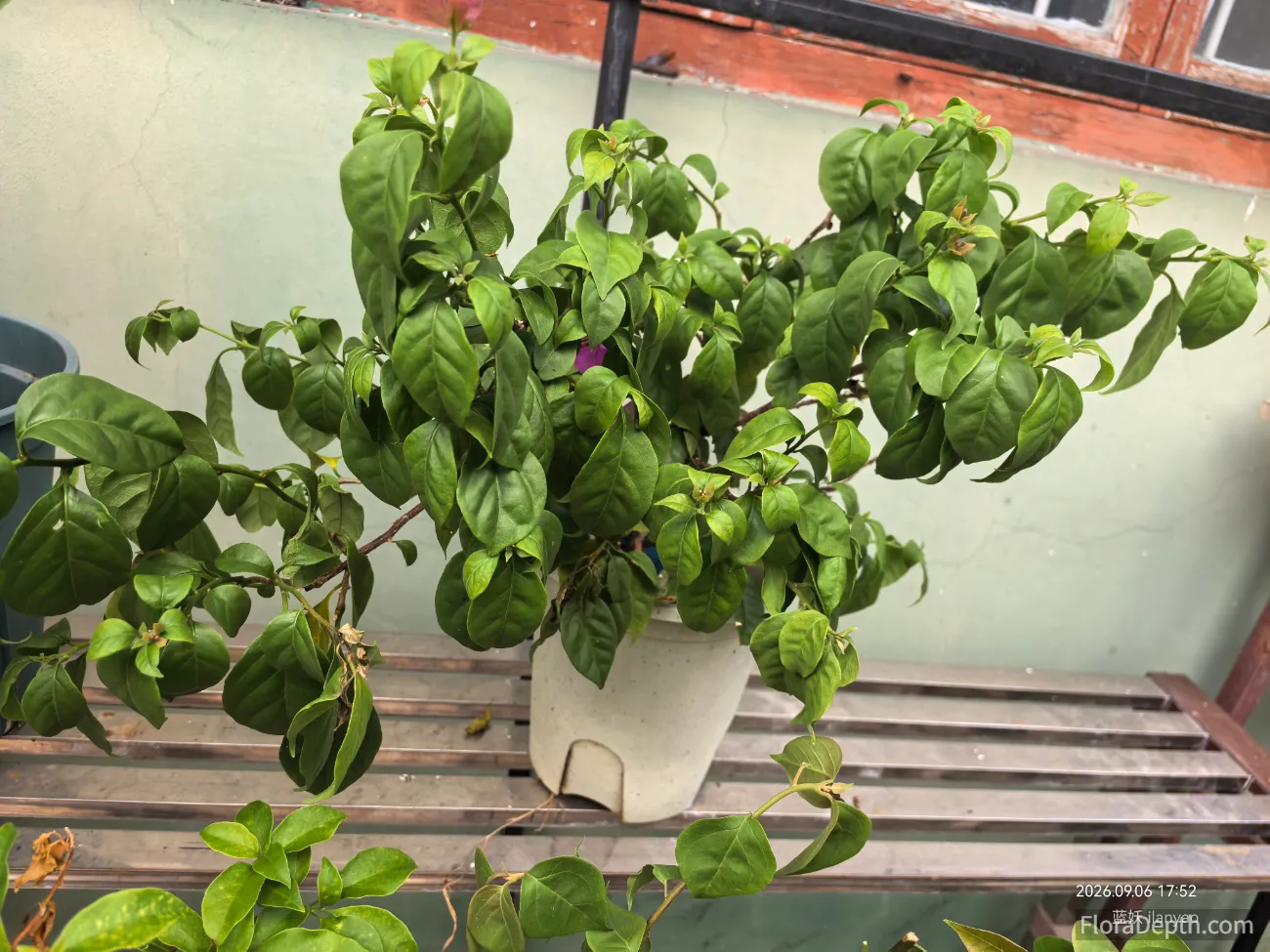
I asked her to scratch the bark of the main stem. When she did, the layer underneath was green.
You see, more often than not, the bougainvillea isn't dead; you just think it is. If you are facing this issue, this guide will show you exactly how to revive a dying bougainvillea and bring it back to life.
Table of Contents
How to Tell if Your Bougainvillea Is Still Alive
Many gardeners use a very simple, but incorrect, rule: no leaves means it's dead. This logic is flawed.
When faced with low temperatures or drought, bougainvillea will proactively shed its leaves to conserve energy, pulling nutrients back into the main stems and roots to survive. No leaves doesn't mean the plant is dead; it has simply entered "survival mode."
How can you tell?
It's simple. Use the "scratch test" for an accurate diagnosis.
Method: Use your fingernail or a small knife to gently scratch the bark on the middle-lower part of the main stem or a basal branch.
- If it's green underneath: Congratulations, it's still alive! The phloem is still moist, and it can absolutely be saved.
- If it's brown and dry as kindling: That section is dead. Don't worry, just keep scratching further down the branch until you find green. If the entire branch is brown, scratch the base of the plant. If the base is also brown, then it's truly beyond saving.
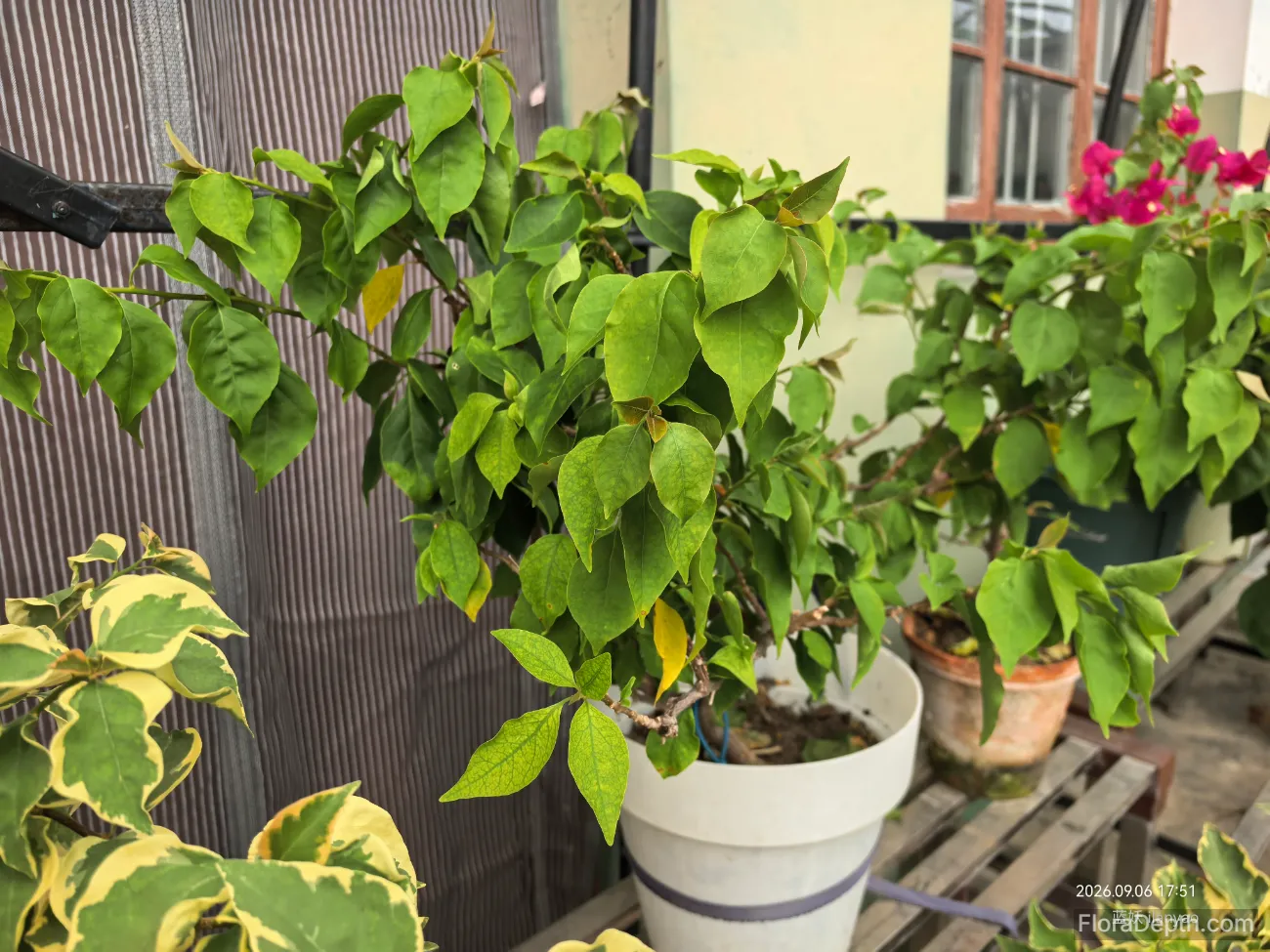
Match the Symptoms to the Cause and Save Your Plant
If the scratch test shows it's alive, don't rush to act just yet. You need to figure out what caused this condition in the first place.
Different causes require completely different solutions. Lanyao has outlined the 4 most common scenarios below. You can find the one that matches your situation and start the rescue process.
1. Root Rot from Overwatering
Bougainvillea's biggest fear is too much water. When roots are suffocated in wet soil, they will eventually rot. This is especially common with indoor bougainvillea due to poor ventilation combined with frequent watering.
Main Symptoms: Leaves turn yellow and soft before dropping in large numbers. The potting mix stays constantly soggy, and there might even be a foul smell coming from the drainage holes.
2. Severe Dehydration
This happens when the plant hasn't been watered for a long time, or when it's exposed to intense summer sun without enough water. It's most common for gardeners who grow plants outdoors and forget to water them before going on a trip.
Main Symptoms: Leaves become dry, curled, and brittle, shattering at the slightest touch. Alternatively, a large number of leaves may turn yellow and drop in a short period. The potting mix will be bone dry and may have pulled away from the sides of the pot, creating cracks.
3. Cold Damage
Bougainvillea is very sensitive to cold and can easily be damaged by frost at temperatures below 32°F (0°C). A sudden, sharp drop in temperature can cause significant damage overnight.
Main Symptoms: Leaves turn black and look as if they've been scalded by boiling water. The tender new shoots will be completely dead.
4. Severe Lack of Light
Bougainvillea thrives in full sun; the more sun, the better it grows. If kept for a long time in a shady spot, like under a large tree or in a dark corner, it will start to show signs of stress due to insufficient light.
Main Symptoms: Stems become thin and leggy, leaves are sparse, and it fails to produce new growth for an extended period.
Once you've identified which of these four issues is causing your bougainvillea to wither, you can consciously avoid it in the future to ensure its long-term health. Now, let's follow Lanyao's steps to save your bougainvillea.
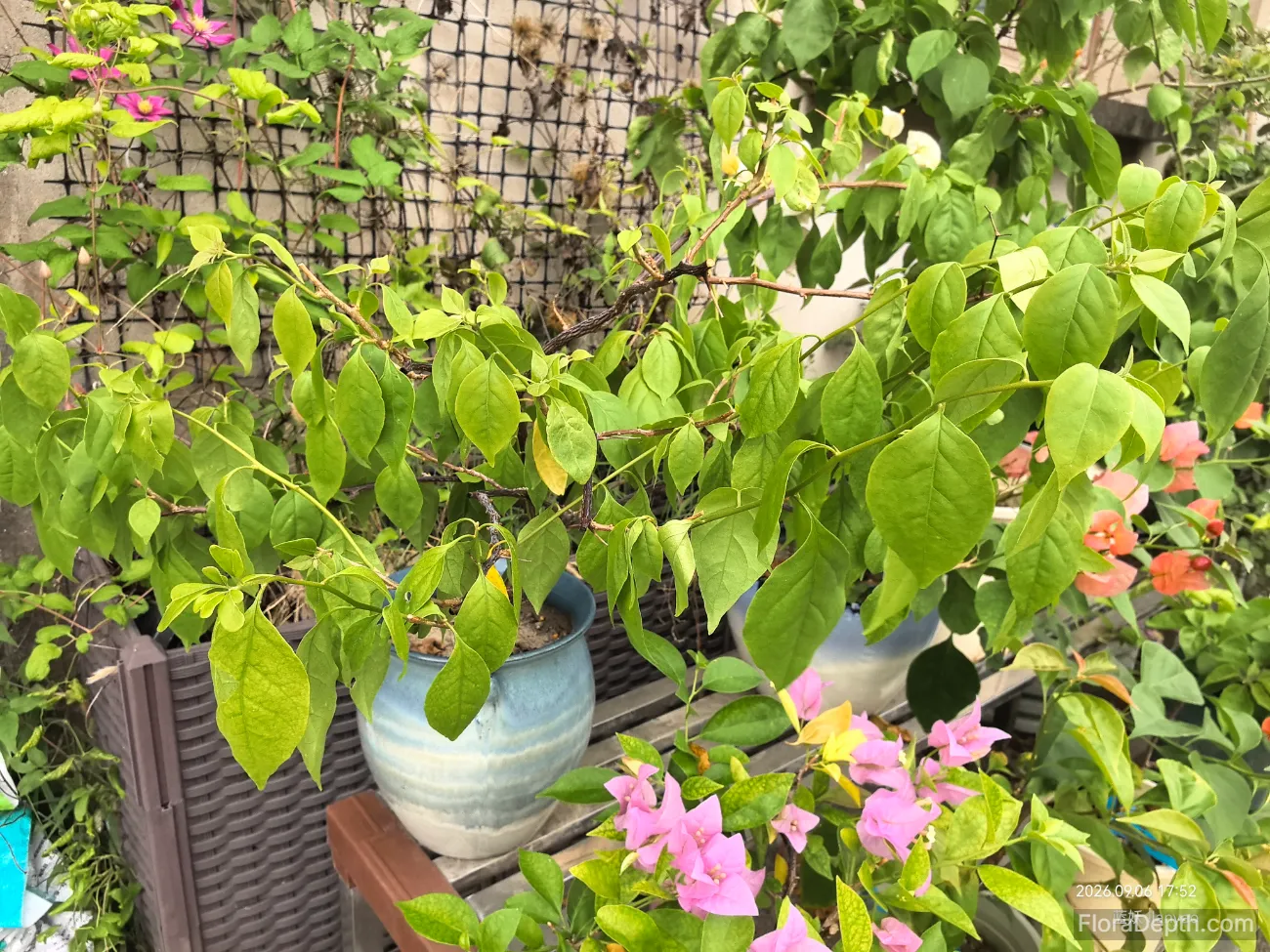
4 Steps on How to Revive a Dying Bougainvillea
Step 1: Prune Away Dead Branches
Cut off all the branches that tested brown and dry in the scratch test.
Make your cuts at a 45-degree angle, about 0.2 inches (0.5 cm) above a section of healthy green growth. This angled cut helps prevent water from pooling and causing rot.
Special Reminder: For plants with severe dieback, it's better to prune too little than too much. If there's even a hint of green, leave it. That's the bougainvillea's spark for a comeback; once you cut it, it's gone.
Step 2: Repot for Root Rot, Rehydrate for Drought
The rescue methods for root rot and severe dehydration are completely different, so be sure not to mix them up.
1. For Near-Death from Root Rot
If your potted bougainvillea is dying from overwatering and root rot, you need to repot it with fresh soil and prune the roots.
Specific Method:
Gently tap the sides of the pot to loosen the plant and remove it. Carefully remove the old soil from the outside of the root ball to inspect the roots.
Note: Do not shake the root ball vigorously. When the soil is wet and the roots are rotten, shaking can easily tear off the healthy roots. The correct method is to gently peel away the outer soil with your hands until the roots are exposed.
Carefully examine the roots and trim away all the black, mushy ones, keeping only the healthy white or pale yellow roots.
After pruning the rotten and dead roots, you must replace the old potting mix with a new one. When rescuing a plant with root rot, the choice of soil is important. Lanyao commonly uses Akadama soil.
Akadama's granular structure provides excellent drainage and aeration while still retaining moisture well, which is very beneficial for encouraging new root growth in bougainvillea. Planting a severely root-rotted bougainvillea in hard-grade Akadama soil (harvested in spring) in a small pot can help it quickly sprout new roots and shoots.
For Bougainvillea Planted in the Ground
You can dig a few small drainage trenches around the plant to help drain away excess water. Then, stop watering and let the soil dry out naturally.
2. For Near-Death from Severe Drought
For a plant in a near-death state from extreme drought, the emergency treatment is to rehydrate it quickly. Simply watering it from the top is often not enough to re-saturate the potting mix.
This is because extremely dry soil can become hydrophobic, causing water to run straight through the cracks and be absorbed very poorly. A faster way to rehydrate it is the bottom-watering method.
Specific Method:
Place the pot directly into a basin or bucket of water, with the water level above the surface of the soil. You will see bubbles rising from the soil as it absorbs the water. Once the bubbling stops, the soil is fully saturated. Remove the pot and place it in a well-ventilated, sunny spot to recover.
Step 3: Give it Plenty of Sun
Bougainvillea is a full-sun plant and needs at least 6 hours of direct sunlight per day. A plant in a near-death state especially needs light to recover its strength.
Move it to the sunniest spot in your home, like a south-facing balcony or window, and let it soak up as much sun as possible. For plants in the ground that are shaded by a large tree, prune the obstructing branches.
Step 4: Water Only When Dry
This step can be tricky for beginners to get right. Lanyao will teach you a simple and clean method: the "lift test."
Specific Method:
When the surface of the soil looks dry, pick up the pot to feel its weight. If it feels light, it's time to water. If it still feels heavy, don't water it yet.
For plants potted in pure Akadama soil, the watering requirements are a bit more forgiving, and overwatering is less of an issue. You can check by digging about 0.8 inches (2 cm) into the surface; if the Akadama soil feels dry, you can water.
3 Things You Absolutely Cannot Do During Recovery
Even after your bougainvillea starts sprouting new buds, you need to be very careful with its care. Avoid these three things.
1. Fertilizing
Even though it's sprouting, the root system is still very weak. Fertilizing can easily cause fertilizer burn and damage the roots. You must wait until the new shoots have grown two or three true leaves before applying a dilute, balanced liquid fertilizer. Not a single drop before then.
2. Moving it Around Frequently
Keep it in one fixed location. Don't move it around often. Large environmental changes force the bougainvillea to re-acclimate, which is a significant challenge for an already weakened plant. Let it rest quietly in its spot.
3. Rushing to Prune for Shape
The leaves are the plant's power generators, creating energy through photosynthesis. For a weak plant that has just been rescued, do not prune it lightly. If you cut off the leaves, you remove its ability to produce energy. Wait until the new branches are longer than 6 inches (15 cm) before considering pruning.
With patience and the right care, mastering how to revive a dying bougainvillea is entirely possible. Once your plant is on the mend, you can focus on encouraging new growth.
How to Make a Dying Bougainvillea Sprout Faster?
If the bougainvillea's root system is severely damaged and the branches are just bare sticks, planting it directly will usually result in very slow sprouting, or it may not recover at all. In this situation, Lanyao has a method that can greatly improve the survival rate and speed up sprouting.
Specific Method:
Wrap the branches and main stem of the bougainvillea with plastic wrap. Be careful not to wrap it too tightly; keep it a bit loose. Then, plant and water it as usual.
Ensure there is always condensation (moisture) inside the plastic wrap. If there is no moisture, you need to mist it to rehydrate.
Alternatively, you can use a simpler method: place a plastic bag over the entire bougainvillea. However, bagging is generally not as effective as wrapping with plastic wrap. You can choose to wrap or bag based on the specific condition of your bougainvillea.
Once your bougainvillea has recovered and begins producing healthy new shoots, the next step is to encourage flowering. Learn how to make bougainvillea bloom with the right combination of sunlight, controlled watering, low-nitrogen fertilizing, pruning, and well-drained soil.

Lanyao
A home flower grower with hands-on experience since 2014. FloraDepth currently focuses on practical bougainvillea care and container gardening, with more flower-growing guides to come.
More about Lanyao →Latest Garden Notes
 Caught a candid moment with the baby today, surrounded by my favorite flowers. Just feeling so happy and bless…
) The temperature suddenly shot up these past couple of days, and all the osmanthus trees by my front door have…
The temperature suddenly shot up these past couple of days, and all the osmanthus trees by my front door have… Ever since I started growing bougainvillea, I've found it really low-maintenance. I barely have to do anything…
Related Articles
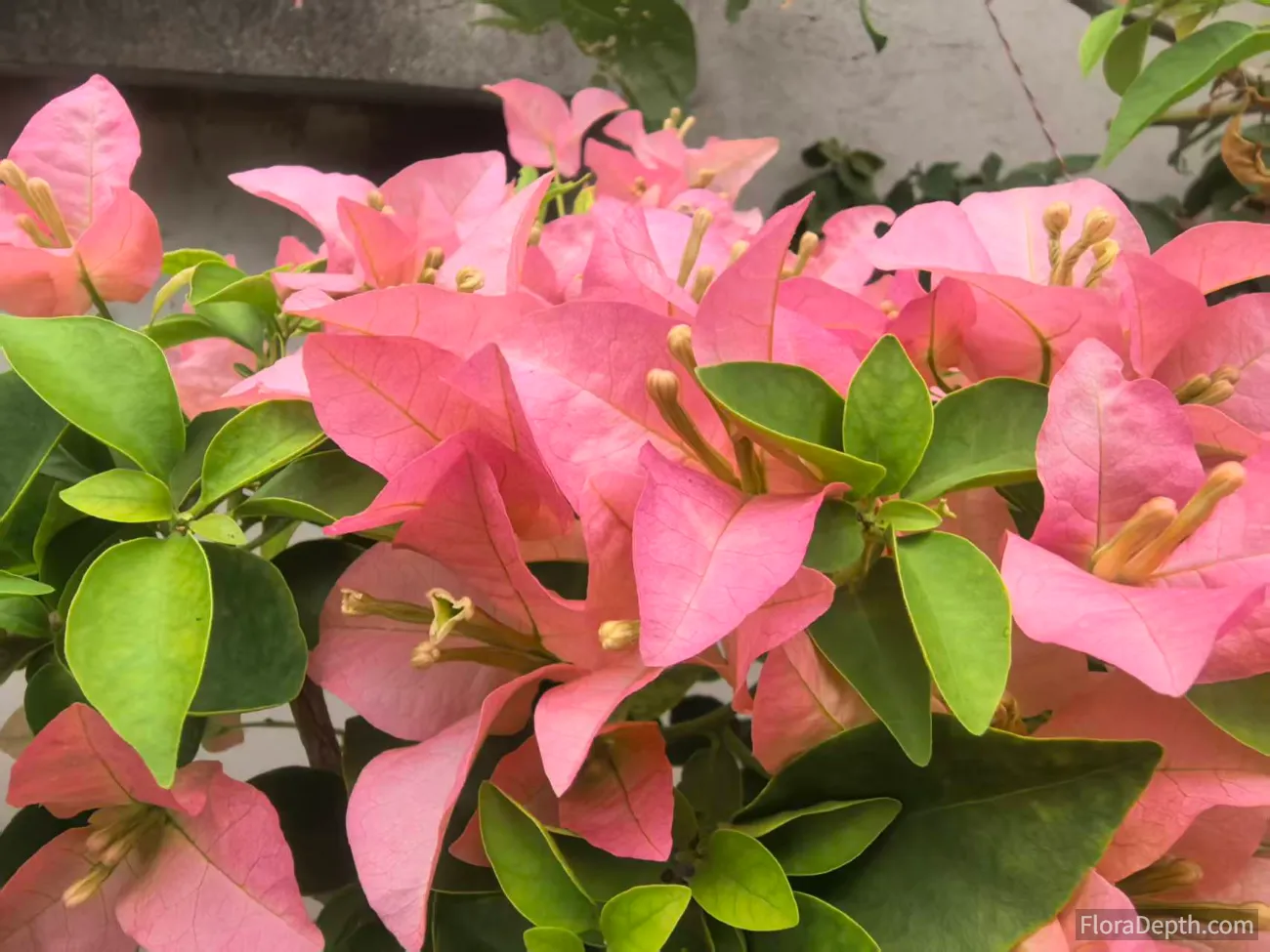
How to Make Bougainvillea Bloom: The Ultimate Guide
Learn how to make bougainvillea bloom with our complete care guide. Discover the exact sun, watering, fertilizer, and pruning secrets for non-stop flowers.

best fertilizer for bougainvillea before winter
Wondering what the best fertilizer for bougainvillea before winter is? Learn the right phosphorus and potassium rates, cold-protection boosters, and 4 pitfalls to avoid.

Bougainvillea Growing Too Fast But Not Blooming
Is your bougainvillea growing too fast but not blooming? Learn the 3 root causes of excessive vegetative growth and how to switch your plant to bloom mode with simple steps.

Bougainvillea in Pots: How to Protect It Through Winter
Learn the critical temperature thresholds for overwintering bougainvillea in pots—10°C to bring it indoors, 5°C as the final survival line. This full guide covers pre-indoor preparation, watering and fertilizing by plant condition, indoor light and temperature matching, and low-temperature survival plans for homes without heating.
Bougainvillea Losing Flowers? 7 Reasons & How to Save It
Is your bougainvillea losing flowers or dropping buds? Discover 7 common causes—from overwatering to cold stress—and learn how to save your plant today!