how to keep bougainvillea blooming in pots
Is your Bougainvillea acting like a "lazy worker," growing lush leaves but refusing to show a single flower? If you are wondering how to keep bougainvillea blooming in pots, don't worry—you are not alone. This is a very common problem among Bougainvillea enthusiasts.
So, how do we break this "curse" and turn your plant into a true "heavy bloomer" that flowers for long periods? By following Lanyao's top rules, you can encourage your Bougainvillea to bloom for more than eight months of the year.
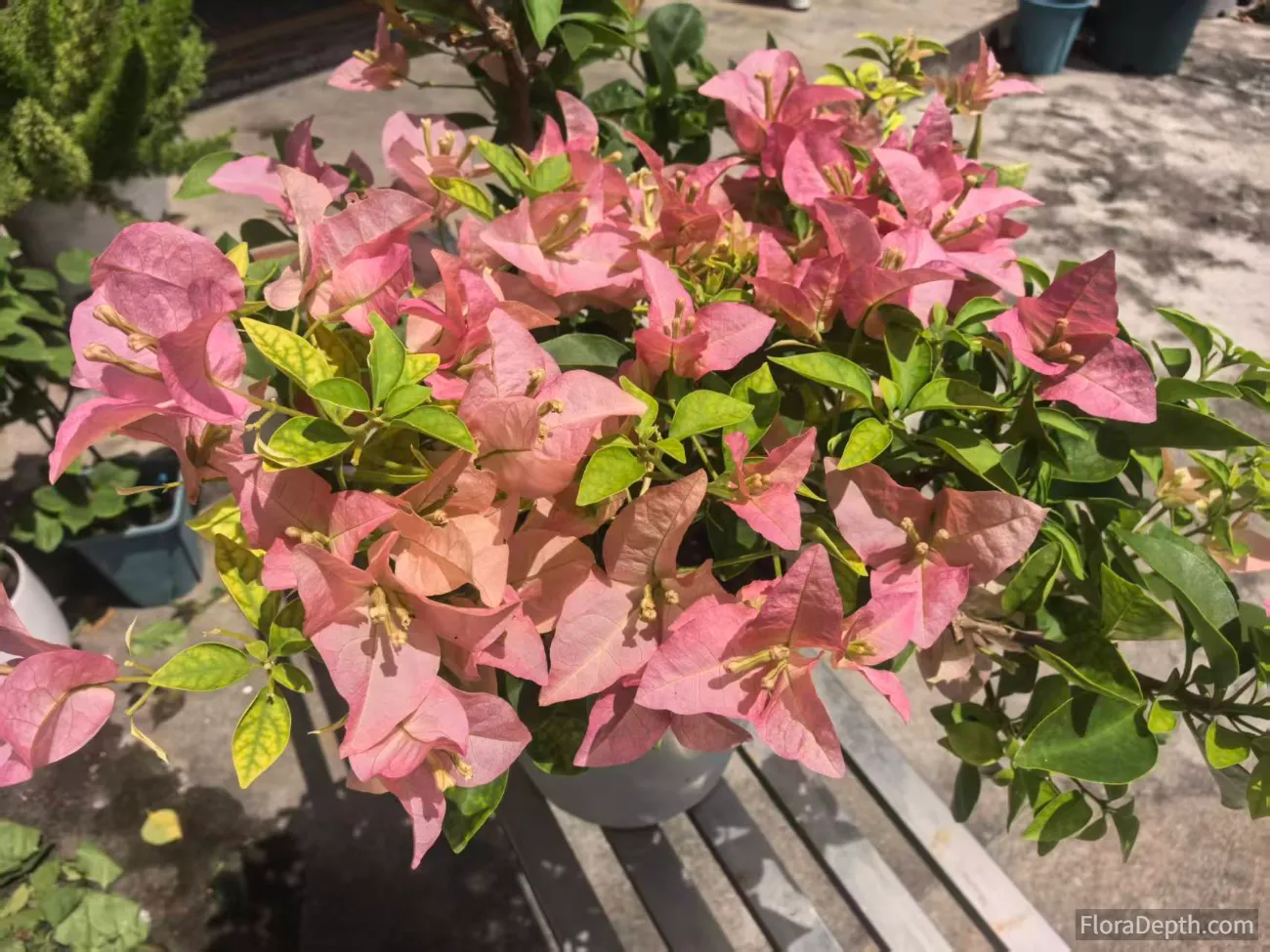
Table of Contents
4 Golden Rules to Trigger Massive Blooms in Potted Bougainvillea
1. Choose a Prolific Variety
Whether a Bougainvillea can bloom multiple times a year depends heavily on its genetics. "Shy bloomers" simply cannot bloom repeatedly. You must select a "free-flowering" (prolific) variety to achieve frequent blooms.
2. Sufficient Sunlight
Bougainvillea is a full-sun lover. If light is insufficient, it will struggle to bloom. It requires no less than 4 hours of direct sunlight per day.
3. Drought Stress
Bougainvillea does not like to bloom in an environment with abundant water and fertilizer. Therefore, don't be "too good" to your plant. If you constantly water and fertilize, it will only grow branches and leaves.
To get more flowers, you must apply appropriate drought stress. Under drought stress, Bougainvillea is much more likely to initiate blooming.
4. Proper Pruning
Proper pruning allows the Bougainvillea to bloom faster and with greater volume. However, note that the pruning method to stimulate flowers is specific. Do not prune randomly, or you might not see a single flower all year.
10 Practical Tips for Continuous Massive Blooms
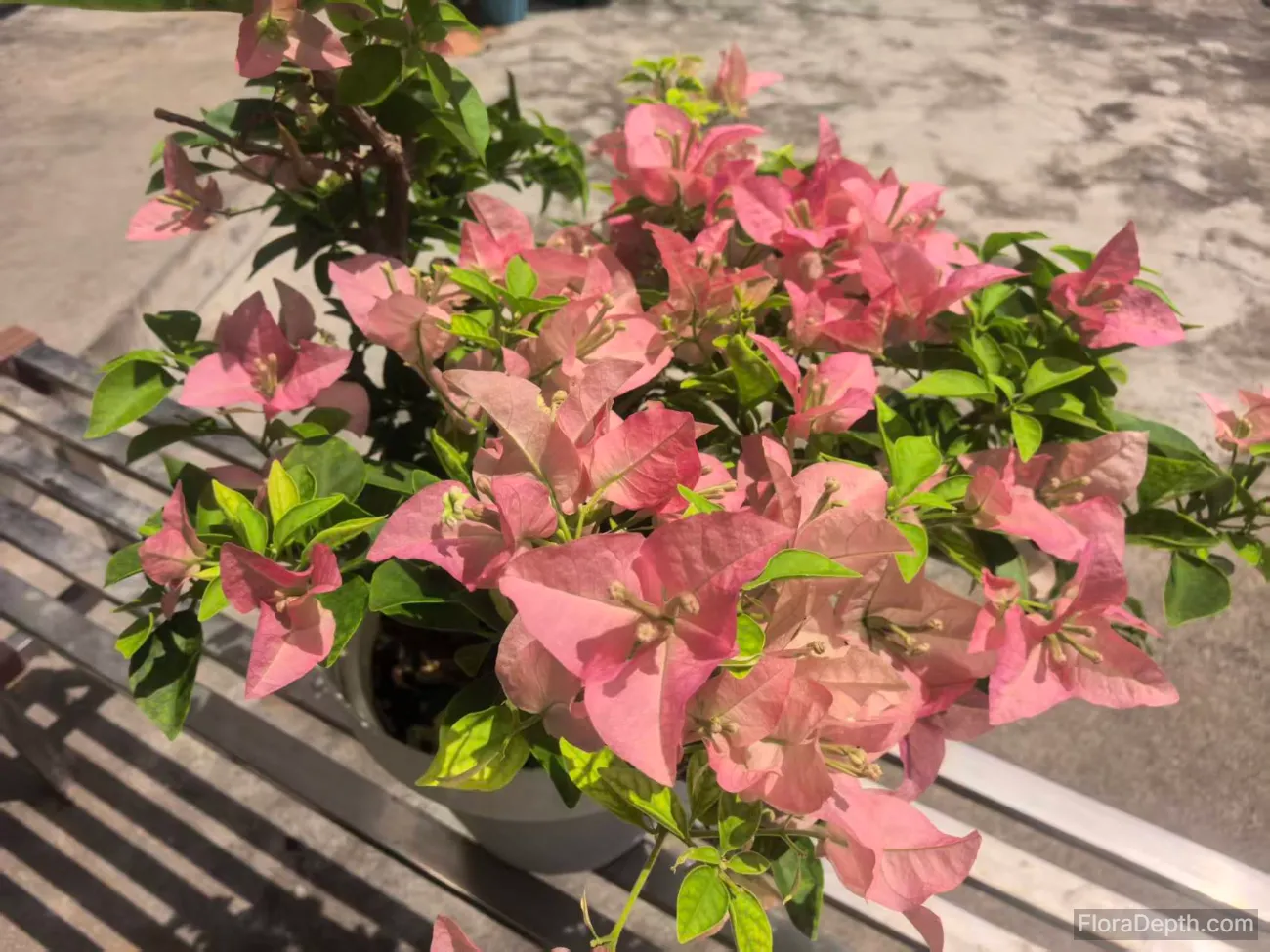
If you want to master how to keep bougainvillea blooming in pots, follow these practical steps to achieve continuous massive blooms:
1. Select a Prolific Variety
If you want your potted Bougainvillea to bloom multiple times a year, variety selection is critical. Choose varieties known for excellent flowering performance. Don't just look for pretty flower colors; "shy bloomers" often have beautiful colors but rarely bloom repeatedly.
When choosing, research the variety's flowering characteristics. Pick one with excellent performance.
2. Grow in a Small Pot
As Lanyao mentioned earlier, Bougainvillea blooms more easily under drought stress, while an environment with abundant fertilizer and water leads to vigorous vegetative growth (lush leaves, no flowers).
Therefore, Lanyao recommends planting directly in a small pot. Small pots hold less soil, which dries out quickly, making it easier to control water. If you use a large pot, the soil volume is high, and it takes a long time to dry out after watering, causing the Bougainvillea to grow vegetatively.
So, what size pot should you choose? There is no fixed standard since seedling sizes vary.
Here is a reference standard from Lanyao:
During the growing season, the potting soil should dry out completely within 1–5 days after watering. Using a small pot makes it easiest to achieve this wet-to-dry cycle. If the soil takes longer than 5 days to dry, you should switch to a smaller pot, increase soil permeability, or improve ventilation and light in your growing environment.
3. Fast Wet-to-Dry Cycle
Lanyao personally recommends a wet-to-dry cycle of 3 days. If you can water thoroughly in spring and have the soil dry out in 3 days, then in summer, you will likely need to water once a day. This is very beneficial for water control.
4. Maintain at Least 4 Hours of Direct Sunlight Daily
Bougainvillea has high light requirements. "Shy bloomers" need no less than 6 hours of light, while "free-flowering" varieties need no less than 4 hours. It is recommended to maintain 6–8 hours of direct sunlight if possible, as this makes blooming easier. Insufficient light leads to leggy growth without flowers.
Light is only one part of successful flowering. For a complete care plan covering sunlight, watering, fertilizer, pruning, and container conditions, see our guide on how to make bougainvillea bloom.
5. Hard Pruning After Spring Blooms
Prolific Bougainvillea varieties typically have a flowering period lasting from September through the following May. Of course, the prerequisite for this is suitable temperature and light, and that you haven't pruned randomly.
Generally, after the spring blooms finish, we perform a hard prune. The goal is to encourage the growth of more new branches and increase the overall framework. Since Bougainvillea blooms on new wood, the more new branches, the more flowers. Hard pruning in spring is done to generate more new wood.
6. "Free-Range" Growth in Summer
After May, as temperatures rise, the Bougainvillea enters a rapid growth phase. At this time, Lanyao suggests keeping fertilizer and water plentiful to let the branches grow vigorously. Do not prune until the branches are semi-ripe (half-woody).
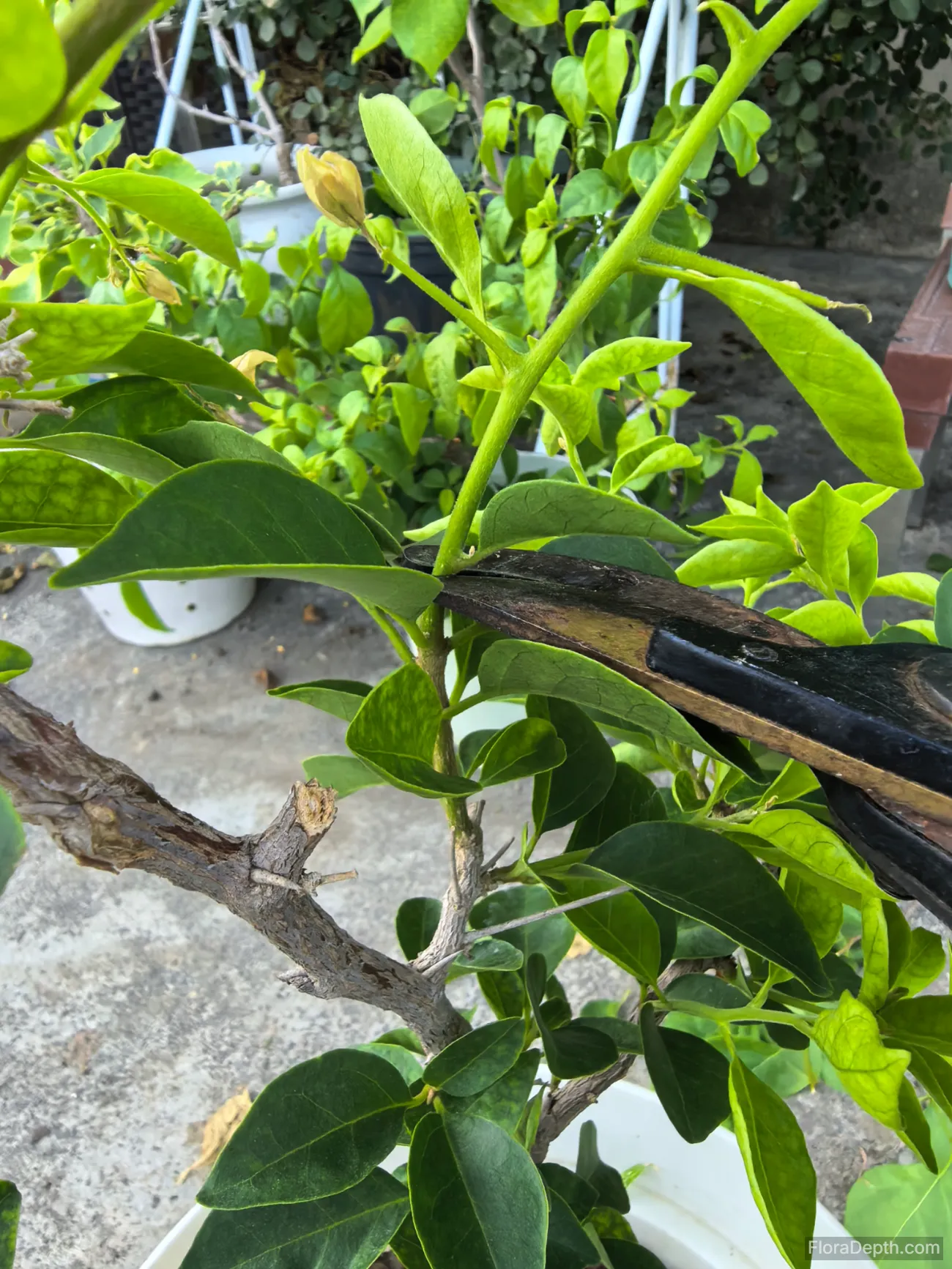
Wait until the branches are mature or semi-ripe before pruning. When pruning, keep only 3–4 buds on each branch. After this pruning, each branch will sprout 3–4 new shoots, instantly increasing the bushiness several times over.
Spend the whole summer growing the framework; do not try to force flowers. This is because when temperatures exceed 35°C, Bougainvillea naturally dislikes blooming. Additionally, the long daylight hours of summer make it difficult for flower buds to differentiate. Therefore, Lanyao's personal advice is to focus on growing the framework in summer for an explosion of blooms in autumn.
7. Cut Back to Stimulate Flowers When Temperatures Stay Below 35°C
When temperatures consistently stay below 35°C and the Bougainvillea framework is full, you can consider entering the flower-forcing stage.
Before forcing flowers, we must first cut back the plant. If the top branches are too tender and not pruned, apical dominance will cause them to keep growing, making it hard to force blooms. Therefore, we need to cut the branches back to the semi-ripe wood. Immediately after pruning, apply an amino acid water-soluble fertilizer (root irrigation plus foliar spray) to help the Bougainvillea sprout quickly.
Then, use Potassium Dihydrogen Phosphate fertilizer, applying it to the roots every 5 days or so to stimulate flower bud formation.
Simultaneously, pay attention to water control to let the Bougainvillea feel the crisis of drought. The specific method is: observe the leaf status in the evening or morning. If the leaves are soft and drooping, you can water. If you water thoroughly and the leaves become soft and drooping again by evening, you can water thoroughly again.
If it takes 2 days after watering for the leaves to become soft and drooping, then only water halfway each time; do not water thoroughly. Note that watering should ideally be done in the morning.
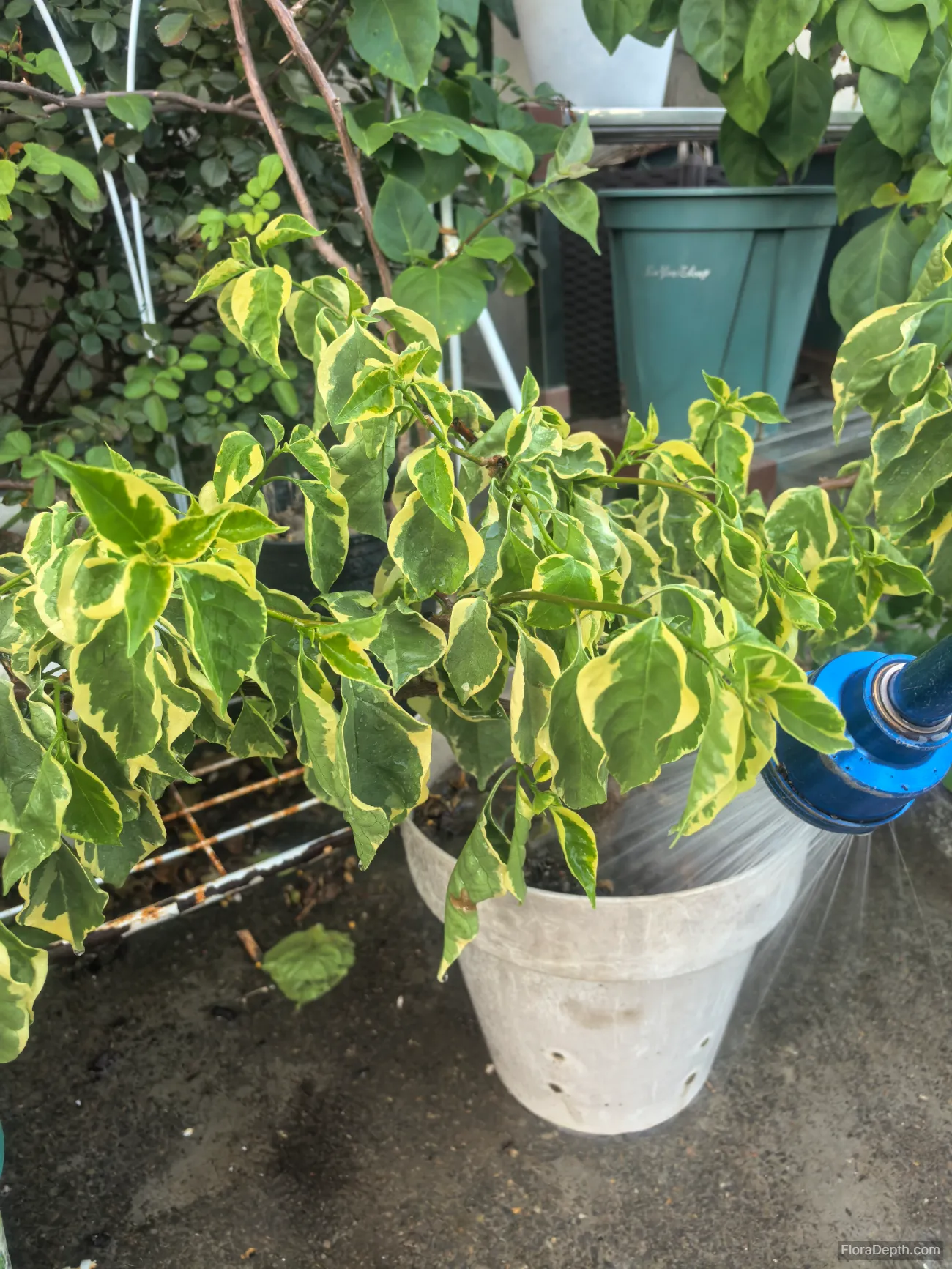
For example, if you notice the leaves are soft and drooping in the evening, you can wait until morning to water. This allows the Bougainvillea to fully feel the crisis of drought. Rest assured, with lower temperatures and no sun at night, water consumption is low, and the plant will not die of drought.
After 20–30 days of water control, flower buds will appear. Once buds appear, stop water control and return to normal watering (dry thoroughly, then water thoroughly).
8. Post-Bloom Pruning for Quick Re-blooming
When the first flush of autumn flowers finishes, we need to promptly prune the spent flower stems and cut back the branches, removing the tender tips and keeping the mature and semi-ripe wood. Then, repeat the flower-forcing steps: fertilize and control water.
It will bloom again in a month, and this second flush will cover the entire branches with flowers, achieving a massive bloom state.
9. No Hard Pruning in Winter
If you can maintain good light conditions and a warm environment in winter, the Bougainvillea can maintain a blooming state throughout the season. If the winter environment or light is insufficient, there is nothing to be done; the Bougainvillea will enter a state of slow growth or dormancy.
However, if you want the Bougainvillea to explode with flowers again in spring, do not hard prune it during winter or early spring. Try to keep the mature wood. Buds that sprout from mature wood generally carry flowers.
If you hard prune in winter or early spring, it will not bloom in spring or summer.
10. Light Control Catalysis
Finally, here is an ultimate flower-forcing method for those with the energy to try it.
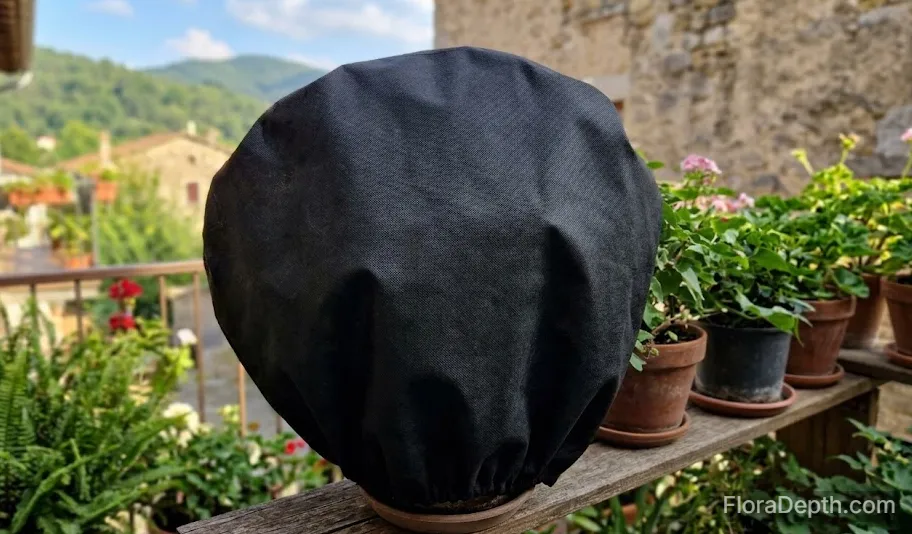
Bougainvillea is a short-day plant, meaning it easily differentiates flower buds in short-day environments. So, if you want it to bloom in summer, you can control the light to artificially create a short-day environment.
Specific method: Give the Bougainvillea 8 hours of sun, and cover it with a black cloth for the remaining time so it sees no light. After a month, the Bougainvillea will bloom.
This method is generally used in commercial planting and rarely in home gardening, but you can give it a try.

Lanyao
A home flower grower with hands-on experience since 2014. FloraDepth currently focuses on practical bougainvillea care and container gardening, with more flower-growing guides to come.
More about Lanyao →Latest Garden Notes
) The temperature suddenly shot up these past couple of days, and all the osmanthus trees by my front door have…
The temperature suddenly shot up these past couple of days, and all the osmanthus trees by my front door have… Ever since I started growing bougainvillea, I've found it really low-maintenance. I barely have to do anything…
 I used to be really into growing roses. I’ve collected quite a few varieties over time, and while they’re gorg…
Related Articles
How to Make Bougainvillea Bloom: The Ultimate Guide
Learn how to make bougainvillea bloom with our complete care guide. Discover the exact sun, watering, fertilizer, and pruning secrets for non-stop flowers.

best fertilizer for bougainvillea before winter
Wondering what the best fertilizer for bougainvillea before winter is? Learn the right phosphorus and potassium rates, cold-protection boosters, and 4 pitfalls to avoid.

Bougainvillea Growing Too Fast But Not Blooming
Is your bougainvillea growing too fast but not blooming? Learn the 3 root causes of excessive vegetative growth and how to switch your plant to bloom mode with simple steps.

Bougainvillea in Pots: How to Protect It Through Winter
Learn the critical temperature thresholds for overwintering bougainvillea in pots—10°C to bring it indoors, 5°C as the final survival line. This full guide covers pre-indoor preparation, watering and fertilizing by plant condition, indoor light and temperature matching, and low-temperature survival plans for homes without heating.
Bougainvillea Losing Flowers? 7 Reasons & How to Save It
Is your bougainvillea losing flowers or dropping buds? Discover 7 common causes—from overwatering to cold stress—and learn how to save your plant today!