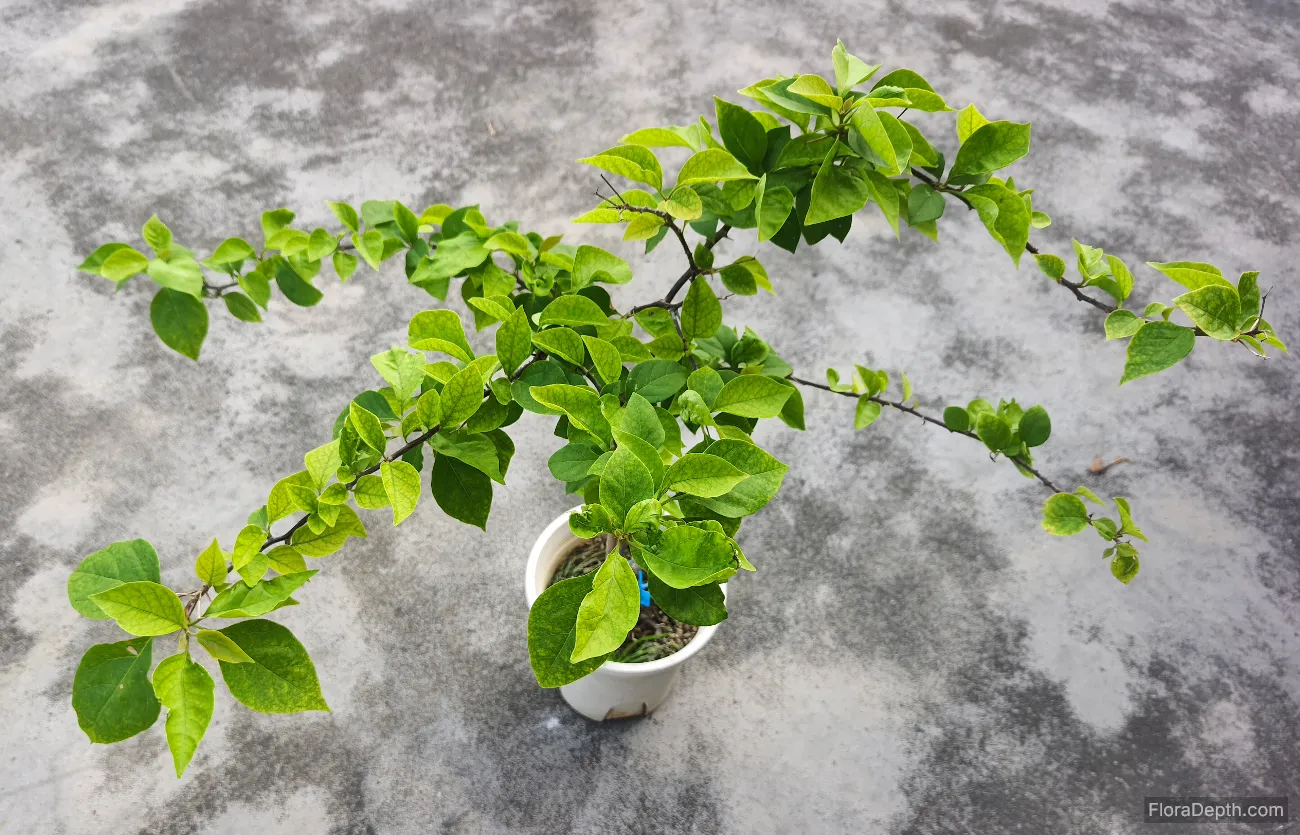
This journal follows the real-life journey of a Bougainvillea ‘Bois de Rose’ plant, from its day-to-day care through ongoing growth, flowering, and shaping. We update the plant’s progress over time and document important details such as light levels, temperature, watering, fertilizing, pruning, repotting, and pest and disease management.
Please note that this is not a growing journal that shows only successful results. Alongside new growth, flower buds, and peak blooms, we also record yellowing leaves, leaf drop, leggy growth, failure to flower, post-transplant recovery, and other challenges that arise along the way. We explain what action we took in each situation and how the plant responded afterward.
Through this long-term record, you can see how Bougainvillea ‘Bois de Rose’ actually performs at different stages of growth and use our experience as a reference for watering, fertilizing, pruning, and encouraging blooms in similar conditions. Every growing environment is different, with variations in climate, light, potting mix, and cultivation methods, so the approaches described here are best used as practical guidance for observation and experimentation rather than as fixed rules for every region.
We will do our best to include original photographs, consistent dates, and specific observations so that each update reflects the plant’s genuine progress. Start with the first entry and follow along as this Bougainvillea ‘Bois de Rose’ gradually grows, develops new branches, sets flower buds, and blooms again.
Plant Archives
Variety & Spec: 'Bois de Rose' Bougainvillea | Cutting-grown plant
Growing Location: Jiaxing, Zhejiang, China (South-facing, full sun)
Container: 1-Gallon standard plastic pot (fitted with a bottom drainage mesh)
Acquisition Date: October 2024 (Note: After entering dormancy in Dec 2024 through early July 2026, it was left neglected on an open balcony with only sporadic watering and experienced extreme drought conditions.)
Log Start Date: July 25, 2026
Initial Condition
Prior to July 2026: The plant was completely neglected, resulting in severely desiccated potting soil, heavy root damage, and sparse, weak new growth.
Mid-July 2026: Moved outdoors to a full-sun location with consistent watering. Applied a single dose of slow-release fertilizer.
Current Status: Multiple new shoots are now flushing and growth is recovering. However, the young leaves exhibit marked chlorosis (yellowing), displaying classic signs of iron deficiency. The primary driver behind this is likely the extensive root damage caused by the prolonged period of extreme drought.
I've been so busy taking care of the baby lately that I forgot to update you on my bougainvillea! I've barely touched it, just giving it some water every now and then, and it's already blooming for the second time since I started tracking it. Had to take a photo to remember the moment!
Ep.6Bois Rose Bougainvillea: Mostly green again with a few early flowers
At present, the new leaves have basically returned to green, new shoots have emerged and flowers have opened. Overall, it looks decent and is in good condition.
Environmental Data for This Period
Temperature range: 27°C – 33°C (81°F – 91°F)
Air humidity: approximately 75% – 80%
Light conditions: south-facing courtyard, full sun
Care Log for This Period
Watering: once every 2 days.
Fertilizing: none
Observation Notes
Leaf yellowing has improved. New leaves have turned green, new shoots have sprouted, and there is a small amount of flowering.
Pest and Disease Check
Pest and disease check: slight signs of thrips damage; no treatment applied.
Reflections / Questions
Although all the branches are at a horizontal angle, not many new shoots have emerged, so the amount of flowering is limited. The reasons are as follows:
The root system is not healthy enough. The previous persistent yellow leaves and lack of new shoots were caused by severe root damage from long-term drought. Although the root system has improved, it is still not in great shape.
The branches are old and have not been pruned. These branches are fully lignified and have never been pruned. Without pruning to stimulate nutrient flow, the plant remained in a stagnant, stunted state for a long time.
The root system cannot supply enough nutrients for all the buds on the branches to break. The weak root system is still a very significant factor.
Continue focusing on root recovery and do not intervene for now.
Focus for Next Period
Observe whether other buds can continue to sprout and bloom.
This bougainvillea has been in bloom for a few days now. I’ve been a bit busy lately, so I haven't had the chance to keep a record. Seeing the flowers appear is a great start, and overall, the plant is growing really well.
As for watering, I don't do it every single day; I mainly just check the condition of the potting soil to decide. The temperature here is currently around 33°C (about 91°F) with a humidity level of roughly 58%. It’s pretty typical for this area—just constantly damp and muggy, which can be quite uncomfortable.
I expect even more flowers in a little while, and I’ll be sure to share an update when that happens.
After the yellowing leaves appeared because too much foliar fertilizer was sprayed last time, I carried out some simple treatment. The browning and drying along the leaf margins is no longer spreading, and the chlorosis has also improved somewhat. More encouragingly, new shoots have started to grow, which is good news.
Environmental Data
Temperature range: 27°C ~ 33°C
Relative humidity: approximately 75% ~ 95% (there was rainfall for three consecutive days this week)
Light conditions: south-facing courtyard, full sun
Care Log
Watering: Watered once every 2 days. It is not necessarily necessary to water every day; the main consideration is whether watering is actually needed. This point is very important.
Fertilizing: Applied a foliar spray of micronutrient and secondary-nutrient fertilizer once.
Observations
The yellowing and drying along the leaf margins has not spread, and the chlorotic leaves have shown some improvement. A large number of new shoots have begun to emerge. In fact, when problems like this occur, beginners in particular may become somewhat panicked and start taking random measures. This can instead hinder the plant’s growth.
Reflections / Questions
The emergence of new shoots on bougainvillea is closely related to air humidity. When the humidity is high, new shoots are more likely to emerge. If conditions remain dry, new shoots will emerge much more slowly, and the plant may even remain stagnant for a long time. Therefore, when growing bougainvillea on an indoor balcony, consider increasing the humidity after pruning to encourage rapid new-shoot growth.
Focus Points for Next Period
Observe how the new shoots develop and see whether they will produce flowers.
Ep.3The foliar fertilizer is a bit too strong and is burning the leaves.
Due to a previous mistimed over-application of trace element fertilizer, the edges of some leaves are now slightly scorched and yellowed, with no noticeable improvement yet.
Environmental Data
Temperature Range: 27°C–38°C (81°F–100°F)
Relative Humidity: Approx. 45% (with light rain showers on two days this week)
Light Conditions: South-facing courtyard, full sun
Care Log
Watering: Watered once every 2 days.
Fertilization: Applied a foliar spray combining secondary/micro-element fertilizer with amino acid foliar fertilizer once.
Other Tasks: Added a fresh top-layer of nutrient-rich potting soil to the container.
Observations
A small number of leaf edges have turned yellow and crispy due to the fertilizer application. However, there is no need to worry; this is a very common scenario in home gardening and not a major issue that will hinder overall growth.
This is a high-frequency mistake that many beginners make, but it is not a huge deal, and the plant will gradually recover over time.
Pest & Disease Inspection: Thoroughly checked the undersides of the leaves and tender shoots; found no signs of spider mites, scale insects, or powdery mildew.
Reflections / Questions
The scorched leaf margins are likely the result of an overly concentrated foliar spray causing fertilizer burn.
When mixing the fertilizer solution, the fertilizers were poured freehand without using measuring tools, and spraying two types of fertilizer together likely resulted in exceeding the safe concentration limit.
Moving forward, it is crucial to dilute fertilizers according to the product instructions to prevent fertilizer burn. Additionally, foliar spraying should always be conducted after sunset.
Focus Points for Next Period
Monitor whether new buds are sprouting and growing smoothly.
Ep.2Analysis of Factors Contributing to New Leaf Yellowing
The yellowing and chlorosis of the new shoots' leaves are typical symptoms of iron deficiency. However, the primary cause leading to this phenomenon is considered to be severe root damage.
Environmental Data
Temperature Range: 27°C ~ 35°C (80.6°F ~ 95°F)
Relative Humidity: Approx. 77%
Light Conditions: Full sun, Placement: South-facing outdoor patio/courtyard
Care Log
Watering: On sunny days, thoroughly water once a day.
Fertilization: None.
Other Maintenance: Pinched/pruned the tips once; kept in a semi-neglected state.
Added some garden soil/potting mix to the pot.
Observations
Overall, the plant has more leaves compared to last week, but the new growth is noticeably yellow.
The overall condition of the new leaves shows yellowing and chlorosis, displaying typical symptoms of iron deficiency chlorosis.
Pest and disease check: Inspected the undersides of leaves and tender buds thoroughly; found no traces of spider mites, scale insects, or powdery mildew.
Reflections / Questions
After today's observation, the main issue at present is the yellowing of new leaves, which needs to be resolved. Let's first analyze the causes.
Possible causes:
Alkaline potting soil leading to root absorption issues and iron deficiency. However, with this type of iron deficiency, the plant's growth is usually somewhat normal, whereas this Bougainvillea clearly shows no growth in its new shoots. This cause can basically be ruled out.
Root damage, which is the most likely possibility. Considering the previous long-term lack of care, the potting soil was in an extremely dry state for a extended period, causing substantial damage to the root system and poor nutrient absorption. Combined with the overall poor vigor of the plant, a comprehensive analysis suggests it aligns quite well with this cause.
Focus Points for Next Period
Key tracking point: Whether the yellowing continues to spread or remains unchanged.
Pay close attention to whether the new shoots continue to grow; if they do, it most likely means the root system is fine.
If the yellow leaves continue to worsen, consider repotting with fresh soil to stimulate root development.
Ep.1The series on bougainvillea cultivation has begun
Starting My Bougainvillea Journal Series
Looking back, I realized I’ve been growing bougainvilleas for quite a while now and have gathered a good amount of experience along the way.
I’ve wanted to document my plant care journey as a multi-part series for a while—partly to share what I’ve learned with fellow plant lovers, and partly to keep a record for myself. This time, I deliberately chose a bougainvillea that isn't looking its best to be the star of my very first series.
Whether it turns out to be a success story or a total failure doesn't really matter. What matters most is that I truly enjoy the process. Through this series, I’ll be documenting my experience step-by-step. Whenever issues pop up, I’ll share how I tackle them—hopefully, it gives you a few useful ideas for your own plants!
Below is the baseline condition of this 'Bois De Rose' bougainvillea. Once I'm many episodes into this series, come back and see how much it has changed!
Initial Condition & Baseline Assessment
Prior to July 2026: The plant was completely neglected, resulting in severely desiccated potting soil, heavy root damage, and sparse, weak new growth.
Mid-July 2026: Moved outdoors to a full-sun location with consistent watering. Applied a single dose of slow-release fertilizer.
Current Status: Multiple new shoots are now flushing and growth is recovering. However, the young leaves exhibit marked chlorosis (yellowing), displaying classic signs of iron deficiency. The primary driver behind this is likely the extensive root damage caused by the prolonged period of extreme drought.
Lastly, wishing your plants thrive and bloom beautifully!